MRV: measuring to certify
Monitoring, Reporting, Verification: the backbone of a credible credit
Buyers vigilant about a credit's technical quality before signing.
Without robust MRV, a credit is just a promise. Modern MRV combines satellite, field measurements and independent audit. This is what separates a solid credit from a fragile asset.
MRV stands for Monitoring, Reporting, Verification. It is the evidence chain that turns a farming or industrial practice into certified tonnes of CO₂.
Layer 1: satellite (dMRV) to estimate flows at scale.
Layer 2: field sampling to measure the actual stock.
Layer 3: verification by an accredited independent auditor.
MRV: the evidence chain
MRV stands for Monitoring, Reporting, Verification. It is the evidence chain that turns a farming, industrial or forestry practice into certified tonnes of CO₂ recorded on a registry. The stronger the chain, the more credible and defensible the credit before a CSRD audit, an SBTi auditor, or an NGO. A weak chain exposes to discounts, challenges and ultimately credit withdrawal from the market. MRV is not a technical detail: it is the condition of value for a carbon credit.
Layer 1: satellite and dMRV
dMRV (digital MRV) relies on multispectral satellite data (Sentinel-2 from the Copernicus programme, Landsat from NASA, Planet Labs for high resolution) coupled with agronomic models. For soil carbon, these models estimate the evolution of organic matter stock, the vegetation index (NDVI), soil cover and cultivation history. For forests, they estimate biomass and deforestation. dMRV covers large areas at marginal cost and enables annual, even seasonal monitoring. Its limit: these are modelled estimates that must be anchored in real measurements. No serious methodology relies on satellite alone.
Layer 2: field sampling
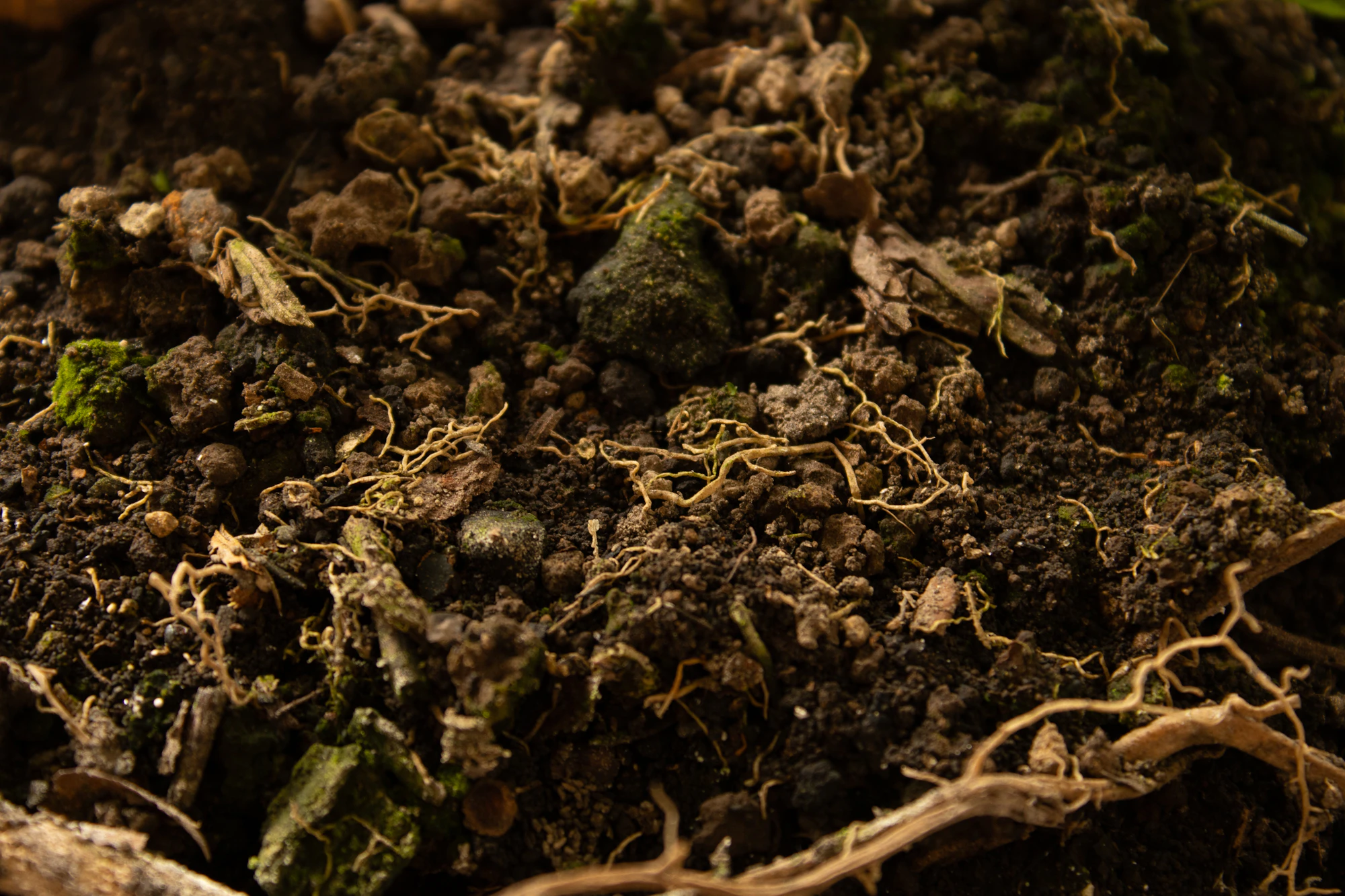
Field sampling is the hard measure that grounds the model in reality. For soil carbon, samples are taken at regular intervals (typically every 3 to 5 years) on statistically representative grids. Samples are analysed in lab to measure the actual soil organic carbon stock (often in mg C/g soil, converted to tonnes per hectare based on bulk density). For forests, it is tree measurement (diameter, height, species) on inventory plots. Slow, costly and logistically complex, but essential. Without field samples, no dMRV calibration, hence no certifiable credit under Gold Standard or Verra.
Layer 3: independent verification
Verification is the final audit, conducted by a Validation and Verification Body (VVB) accredited independently of the project developer. Main market VVBs: DNV, TÜV (TÜV SÜD, TÜV Rheinland, TÜV NORD), Bureau Veritas, AFNOR Certification, SCS Global Services, Aster Global. The VVB checks consistency between satellite data, field samples and developer declarations. It verifies that the methodology was applied correctly, that project boundaries are respected, and that additionality calculations hold. The verification report is public on the standard's registry. Without a favourable VVB opinion, the credit is not issued.
The buffer pool: insuring permanence
To manage reversibility risk (fire, drought, abandoned practice), standards require a buffer pool: a mutualised reserve of non-tradable credits, fed by each project at 10 to 25 % depending on risk. If a reversible event occurs (forest burnt, mismanaged soils), cancelled credits are compensated by the buffer pool, protecting the buyer. Gold Standard, Verra and Puro.earth have operational buffer pools. Label Bas-Carbone works differently, with less mutualisation. For buyers, checking the existence and health of a programme's buffer pool is a quality criterion often overlooked but structurally important.
2024-2026 innovations: sensors, AI, blockchain
MRV is evolving fast. On the sensor side, ground-level IoT networks (moisture, temperature, CO₂ probes) enable more continuous and finer-grained measurement. On the AI side, deep-learning models combine satellite, sensors and history to reduce estimation uncertainty. On the blockchain side, several registries explore credit registration on public blockchains (Toucan Protocol, Climate Action Data Trust) to strengthen traceability, but they have not yet replaced the official standard registries. These innovations do not replace the three layers, they improve them. Watch out: a project pitched only as 'blockchain MRV' without field samples or accredited VVB is a red flag.
Reading a PDD: what to look for
The Project Design Document (PDD) is the reference document for a certified project. To assess MRV quality, look at five sections in priority. (1) Methodology: which one is used, is it CCP-approved? (2) Baseline: what reference scenario, what assumptions, what demonstrated additionality? (3) Monitoring plan: what sampling frequency, what grid density, what sensors? (4) Verification body: who is the VVB, is it accredited by UNFCCC or ISO 17029? (5) Buffer pool: what contribution to the programme's buffer. These five points give a quick read of MRV robustness. The PDD is public on the standard's registry, never pay to access it.
Common buyer mistakes
Three recurring traps. (1) Buying on standard name alone without checking the methodology: standards evolve, older methodologies can be obsolete (see the Verra REDD+ controversies). (2) Confusing estimated and issued credits: only issued and retired credits can appear in a CSRD or ESG report. An ex-ante offtake is not a proof of retirement. (3) Ignoring the buffer pool: a project without mutualised risk is exposed in case of reversal. These three checks take less than an hour per project and avoid later discounts or auditor reservations.
For soil carbon, the gap between satellite estimates and field measurements can reach 20 to 30 %. This is exactly why the three layers are needed: none is enough on its own.
Frequently asked questions
Ready to take action?
Explore buyer support